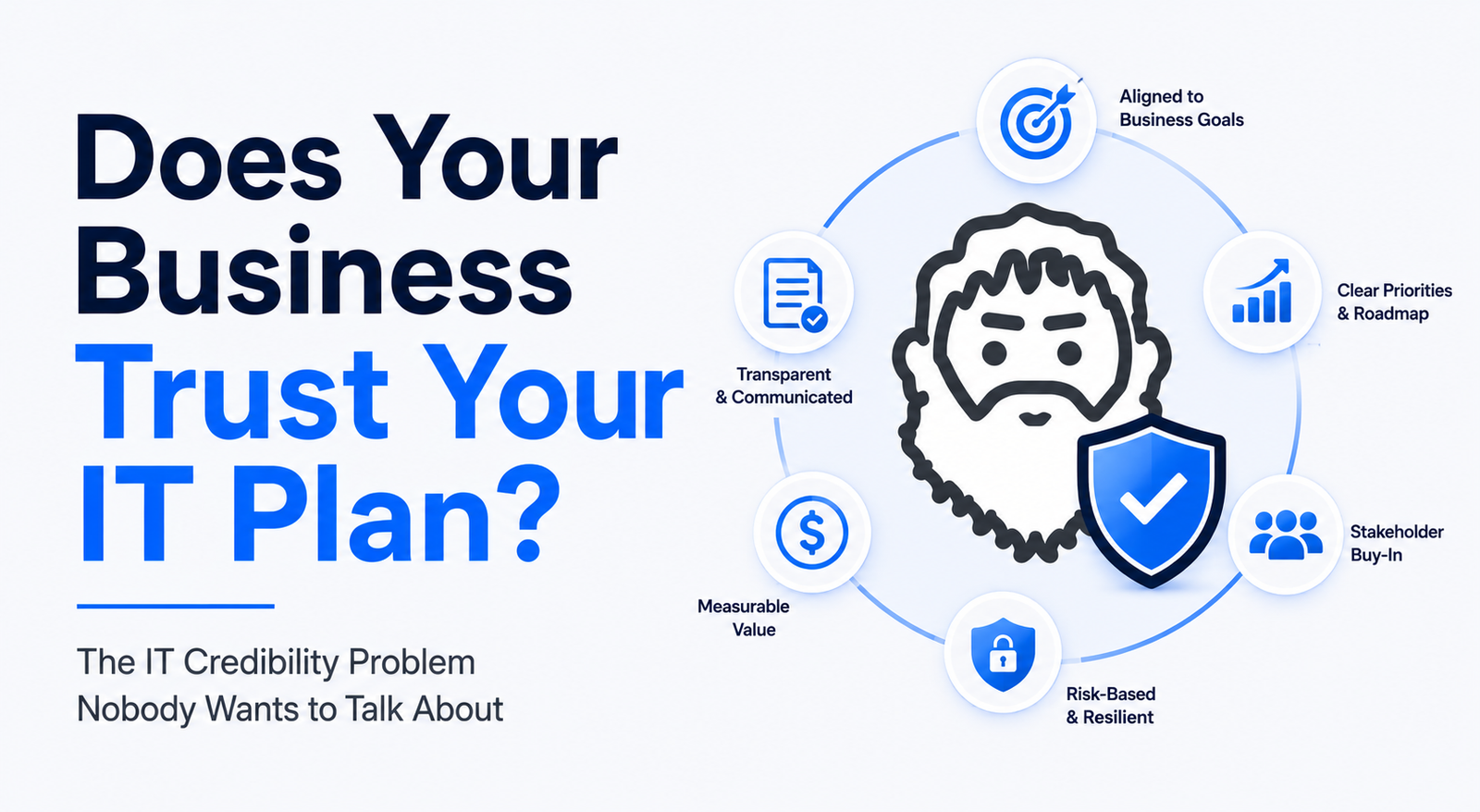
Ask any CIO whether their business stakeholders trust their IT investment decisions, and most will pause before answering. Not because the answer is no – but because the honest answer is: not entirely.
That gap in trust is the IT credibility problem. And it doesn’t come from bad intentions or poor technical judgment. It comes from three persistent failure points in how IT plans, executes, and reports on its investments.
1. Planning That Can’t Justify Itself
When business leaders ask why a particular initiative is being prioritized over another, the answer should be clear, objective, and defensible. Too often, it isn’t. Priorities are set through rounds of leadership meetings, informed more by seniority and advocacy than by structured analysis. Costs are estimated informally. Trade-offs are implicit.
The result is a plan that looks complete on paper but can’t withstand scrutiny. When a CFO or COO pushes back on a budget request, or questions why a project their team needs is ranked 47th, IT struggles to respond with anything more than ‘the team reviewed it.’ That’s not an answer that builds confidence.
Credibility in planning comes from transparency – showing stakeholders not just what you decided, but how and why. That requires a structured framework for prioritization, with scoring that anyone can interrogate, not just the people who built the spreadsheet.
Priorities set through advocacy and tenure aren’t priorities – they’re politics. And business leaders can tell the difference.
2. Execution That Goes Dark After Approval
The credibility problem doesn’t end when the plan is approved. For most business units, handing budget to IT feels like dropping money into a black box. Projects get funded, and then, unless something goes wrong, there’s little visibility into whether spend is tracking to plan, whether timelines are holding, or whether the work is heading in the right direction.
By the time issues surface, they’re expensive to fix. Budgets have drifted. Timelines have slipped. And the conversation shifts from ‘how do we course-correct?’ to ‘how did we not see this coming?’ Stakeholders don’t need perfect execution – they need transparency and timely visibility into how execution is actually going. Without it, trust erodes quietly, one missed milestone at a time.
3. Benefits That Are Promised and Forgotten
This may be the most damaging failure of all. Every IT initiative goes into the plan with a benefit case – efficiency gains, cost savings, revenue enablement, risk reduction. Those numbers justify the investment. They win the approval. And then, in most organizations, they’re never revisited.
There is no systematic tracking of whether promised benefits materialized. No feedback loop. No accountability. Business leaders know this, even if they don’t say it directly. After a few cycles of approving projects whose benefits quietly disappear into the rounding error of the general ledger, the benefit case stops being taken seriously – which means IT’s investment rationale stops being taken seriously.
If you can’t show that last year’s investments delivered what you promised, why should anyone believe this year’s numbers?
Credibility Is Earned, Not Assumed
The CIOs who have the most influence with their peers and boards are not necessarily the ones running the most technically sophisticated organizations. They’re the ones who can walk into any room, at any point in the planning cycle, and answer three questions with clarity: why did we prioritize this, how is it tracking, and did it deliver?
That’s the standard. And it’s achievable – but not with the tools and processes most IT organizations are still relying on today.